
Almost everyone has experienced a hiccup attack.
You’re eating dinner, chatting with friends, or drinking a cold beverage when suddenly it happens.
Hic!
A few seconds later:
Hic!
Then again.
And again.
The involuntary sounds arrive without warning, often at the most inconvenient moments. Most hiccups disappear within a few minutes, but during those brief episodes they can be surprisingly annoying.
What makes hiccups particularly fascinating is that despite centuries of medical study, scientists still do not fully agree on why they happen.
Doctors understand the mechanics of a hiccup. They know which muscles are involved and what causes the familiar sound. Yet the deeper question—why humans evolved the ability to hiccup in the first place—remains something of a mystery.
For such a common experience, hiccups hide an unexpectedly intriguing scientific story.
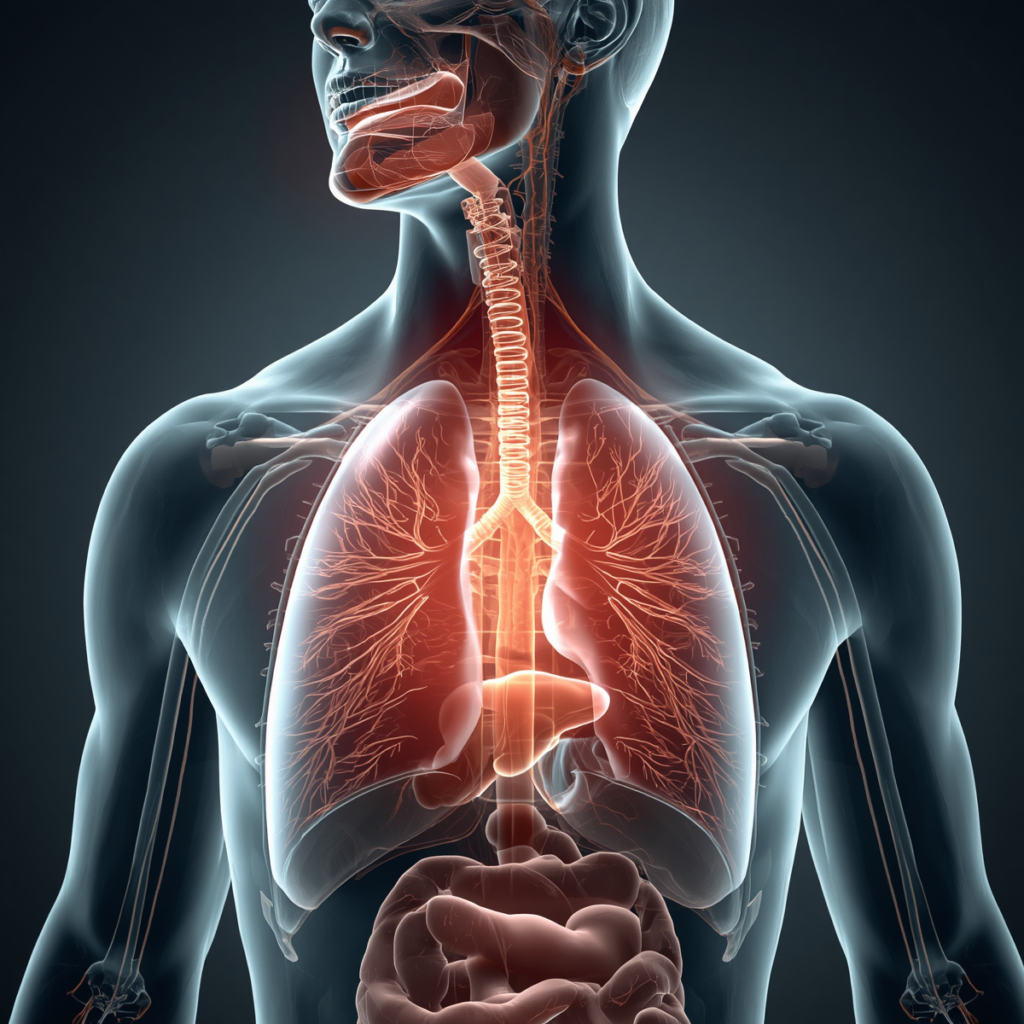
🫁 What Actually Happens During a Hiccup?
To understand hiccups, we first need to look at a muscle called the diaphragm.
The diaphragm is a large, dome-shaped muscle located beneath the lungs. It plays a crucial role in breathing.
When you inhale, the diaphragm contracts and moves downward, creating space for the lungs to expand. When you exhale, it relaxes and returns to its normal position.
A hiccup begins when this muscle suddenly contracts involuntarily.
The unexpected contraction causes a rapid intake of air.
Almost immediately afterward, the vocal cords snap shut, producing the distinctive “hic” sound that gives hiccups their name.
The entire sequence happens in a fraction of a second.
While it may seem simple, scientists are still trying to understand why the body occasionally triggers this unusual reflex.
🍽️ Why Do Hiccups Often Start After Eating?
Many hiccup episodes have obvious triggers.
People commonly develop hiccups after:
- eating too quickly
- consuming large meals
- drinking carbonated beverages
- swallowing excess air
- eating spicy foods
These activities can irritate or stretch the stomach.
The irritation may stimulate nerves connected to the diaphragm, causing the muscle to contract unexpectedly.
This explanation helps account for many everyday hiccup episodes.
However, it does not explain everything.
People sometimes develop hiccups without any obvious trigger at all.
🧠 The Nervous System’s Role
Hiccups involve more than just the diaphragm.
They are controlled by a complex network of nerves connecting the brain, chest, and abdomen.
Scientists believe hiccups involve communication between:
- the diaphragm
- the phrenic nerve
- the vagus nerve
- parts of the brainstem
Together, these structures form what researchers sometimes call the “hiccup reflex arc.”
Something stimulates the system, a signal is transmitted, and the diaphragm suddenly contracts.
The challenge is that the exact purpose of this reflex remains unclear.
Unlike coughing, sneezing, or blinking, hiccups do not appear to provide an obvious survival benefit.
This has led scientists to explore several intriguing theories.
🐸 A Clue from Our Ancient Ancestors
One of the most fascinating explanations links hiccups to evolution.
Some researchers believe hiccups may be a leftover reflex inherited from ancient ancestors that lived hundreds of millions of years ago.
Certain amphibians, particularly tadpoles, display breathing patterns that resemble hiccups.
Tadpoles breathe using both gills and lungs during parts of their development. The neural circuits controlling these breathing mechanisms share surprising similarities with the human hiccup reflex.
According to this theory, hiccups may represent an ancient biological program that has persisted long after its original purpose disappeared.
In other words, hiccups could be an evolutionary relic—a tiny reminder of our distant aquatic past.
🍼 Another Theory Involves Babies
Another popular hypothesis focuses on infants.
Babies hiccup far more frequently than adults.
In fact, unborn babies can even hiccup inside the womb.
Some scientists have suggested that hiccups may help young mammals coordinate breathing and feeding.
The reflex could potentially assist in removing air from the stomach after feeding or help train the muscles involved in respiration.
While this theory remains debated, it offers a possible explanation for why hiccups appear so early in life.
Interestingly, many animals—including cats, dogs, and horses—also experience hiccups.
😲 Why Do Surprises Sometimes Stop Hiccups?
Over the centuries, people have developed countless remedies for hiccups.
Common suggestions include:
- holding your breath
- drinking water quickly
- breathing into a paper bag
- swallowing sugar
- being startled
While some of these methods sound unusual, many share a common goal.
They attempt to interrupt the hiccup reflex by altering breathing patterns or stimulating the nervous system.
Holding your breath, for example, increases carbon dioxide levels in the blood, which may help reset the diaphragm’s activity.
Similarly, a sudden surprise may disrupt the nerve signals contributing to the hiccup cycle.
Not every remedy works every time, but some have genuine physiological explanations behind them.
⏳ When Hiccups Become a Serious Problem
Most hiccups disappear within a few minutes.
Occasionally, however, they persist.
Medical professionals classify hiccups lasting longer than 48 hours as persistent hiccups.
In rare cases, hiccups can continue for weeks, months, or even years.
Such prolonged episodes can interfere with:
- sleep
- eating
- speaking
- overall quality of life
Persistent hiccups may sometimes indicate underlying medical conditions involving the nervous system, digestive system, or other parts of the body.
These cases are uncommon, but they remind us that hiccups are more than a simple annoyance.
🌍 A Universal Human Experience
One reason hiccups are so fascinating is their universality.
Nearly everyone experiences them.
They affect people regardless of age, culture, language, or nationality.
Throughout history, societies around the world have developed their own explanations and remedies.
Some traditions involve special breathing techniques.
Others rely on folk wisdom passed down through generations.
The fact that hiccups are both common and mysterious has helped them become part of everyday culture as well as medical science.
🔬 A Mystery That Remains Unsolved
Modern medicine has solved countless biological puzzles.
Scientists can sequence genomes, perform organ transplants, and explore the workings of the human brain.
Yet hiccups remain surprisingly elusive.
Researchers understand how hiccups occur.
They understand the muscles involved and many of the triggers.
But the deeper evolutionary reason for their existence remains uncertain.
Perhaps future research will finally reveal why humans retained this peculiar reflex.
Until then, hiccups remain one of the body’s most familiar unanswered questions.
💡 The Tiny Reflex That Keeps Scientists Curious
Most people view hiccups as a minor inconvenience.
A brief interruption before life returns to normal.
Yet behind that simple “hic” lies a fascinating scientific mystery involving muscles, nerves, evolution, and human biology.
The next time you find yourself battling a case of hiccups, remember that you’re experiencing something scientists still cannot fully explain.
For a reflex that lasts only a few minutes, it has managed to keep researchers curious for centuries.
And sometimes, the smallest mysteries are the most interesting.
🧭 Continue Your Journey
If you enjoyed discovering the hidden mysteries of the human body, don’t miss our previous post:
👉 The Shortcut That Reshaped World Trade
Explore how the Suez Canal transformed global commerce by creating one of the most important shipping routes in human history.
📬 Stay Connected with Trivialwiki
👉 Facebook: https://facebook.com/Trivialwiki
👉 Instagram: https://instagram.com/trivialwiki
👉 YouTube: https://youtube.com/@trivialwiki
👉 Pinterest: https://pinterest.com/Trivialwiki
Learn. Explore. Discover.
Almost everyone experiences hiccups, yet scientists still debate why they exist. What is the strangest hiccup remedy you’ve ever heard or tried? Share your story in the comments! 😄
1 thought on “Why Do We Hiccup? The Mystery Science Still Hasn’t Solved”