
Every year, millions of people gather around a birthday cake, sing a familiar song, and watch as candles flicker in the glow of celebration.
Then comes the moment everyone anticipates.
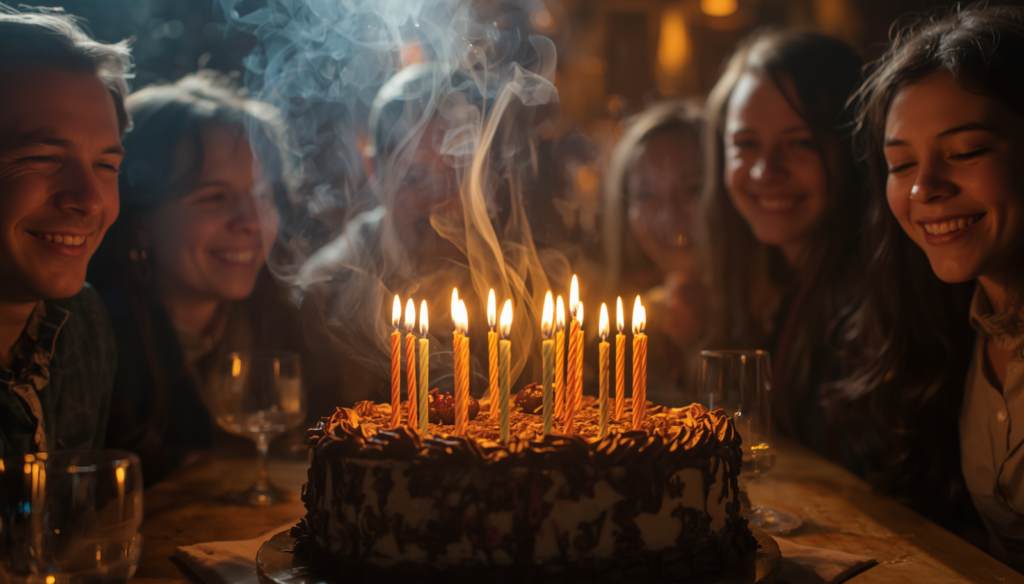
The birthday person closes their eyes, silently makes a wish, and blows out the candles in a single breath.
It’s a tradition so common that most people never stop to question it.
Why do we put candles on birthday cakes?
Why do we make wishes?
And why do we believe that blowing out the candles somehow helps those wishes come true?
As it turns out, this beloved birthday ritual has roots that stretch back thousands of years. It combines ancient beliefs, religious customs, folklore, and a touch of human optimism that has survived across countless generations.
The next time you see candles dancing atop a birthday cake, you’ll be witnessing a tradition far older than you might imagine.
🏺 Ancient Beginnings in Greece
One of the earliest known connections between cakes and candles comes from ancient Greece.
The Greeks worshipped Artemis, the goddess of the moon, hunting, and nature.
To honor her, worshippers sometimes brought round cakes to her temples.
These cakes were often shaped like the full moon.
According to historical accounts, candles were placed on the cakes to make them glow, creating an appearance similar to moonlight.
The flickering flames added both beauty and symbolism to the offering.
While these ceremonies were not birthday celebrations in the modern sense, they may have helped establish the connection between cakes, candles, and special occasions.
It was an early step in the evolution of a tradition that would eventually spread around the world.
✨ The Ancient Power of Smoke
Many ancient cultures believed that smoke carried messages to the heavens.
When offerings were burned, the rising smoke was thought to transport prayers, hopes, and requests to gods or spiritual beings.
This belief appears in various forms throughout human history.
Some historians suggest that birthday candles eventually became associated with wishes because of this ancient idea.
When the candles were extinguished, the smoke drifted upward toward the sky.
People came to believe that their wishes traveled with it.
Whether or not anyone truly expected the wish to be granted, the symbolism proved remarkably enduring.
Even today, many children instinctively close their eyes before blowing out candles, participating in a ritual whose origins may be thousands of years old.
🎂 The Birth of the Birthday Cake
The modern birthday cake emerged much later.
One important chapter in its history took place in Germany.
During the Middle Ages and later centuries, Germans celebrated a tradition known as Kinderfest, a birthday celebration for children.
A cake was often prepared with candles placed on top.
Some accounts describe using one candle for each year of the child’s age, along with an additional candle representing hope for the year ahead.
The candles would remain lit throughout much of the day before eventually being extinguished.
This practice bears a striking resemblance to the birthday traditions we recognize today.
As cultural customs spread across Europe and beyond, birthday cakes and candles became increasingly common.
🎉 Why We Count Candles
Most people place one candle on a cake for each year of age.
The tradition is so widespread that it feels natural.
Yet it likely developed gradually over time rather than appearing all at once.
The candles serve as a visible representation of life’s journey.
A child turning five sees five candles.
Someone celebrating fifty sees fifty.
The growing number of flames reflects the passing of years and the accumulation of memories, experiences, and milestones.
In this sense, birthday candles function almost like a personal timeline.
Each flame represents another chapter in a person’s story.
🌬️ Why Blow Them Out in One Breath?
Many families encourage the birthday person to extinguish all the candles at once.
The reason is partly practical and partly symbolic.
According to popular tradition, blowing out all the candles in a single breath improves the chances that the wish will come true.
Different cultures have developed their own variations of this belief.
Some insist the wish must remain secret.
Others suggest that speaking the wish aloud will prevent it from coming true.
These customs have no scientific basis, of course, but they add an element of mystery and excitement to the celebration.
For children especially, the moment feels magical.
🌍 A Tradition That Traveled the World
Today, birthday candles appear in countries across the globe.
Although cultures celebrate birthdays differently, the image of candles on a cake has become nearly universal.
Movies, television, and popular culture helped spread the practice even further during the twentieth century.
As cakes became more affordable and celebrations more widespread, birthday candles evolved into a shared global tradition.
Few customs have traveled so successfully across languages, religions, and national borders.
The details may vary, but the basic ritual remains remarkably consistent.
🧠 Why Humans Love Making Wishes
The enduring popularity of birthday wishes reveals something interesting about human nature.
People enjoy imagining positive possibilities.
A wish represents hope.
It reflects the belief that the future can be better than the present.
Whether someone wishes for success, happiness, health, or adventure, the act of making a wish creates a moment of reflection.
For a few seconds, people pause and think about what matters most to them.
In that sense, birthday wishes may be less about magic and more about optimism.
They give us an opportunity to imagine the future we want.
🎈 More Than Just a Children’s Tradition
Although birthday candles are often associated with children, adults continue the tradition as well.
This persistence suggests that the ritual fulfills a deeper purpose.
Birthdays mark the passage of time.
They encourage us to look backward at the year that has passed and forward toward the year ahead.
The candles provide a simple yet meaningful focal point for that reflection.
Whether someone is turning six or sixty, the moment carries emotional significance.
The tradition endures because it helps transform an ordinary day into a memorable occasion.
💡 A Tiny Ritual with Ancient Roots
Most people think of birthday candles as a fun part of a celebration.
Few realize they may be connected to ancient moon worship, centuries-old folklore, and long-standing beliefs about wishes and the heavens.
Like many traditions, the ritual has evolved over time.
Its original meanings have shifted, merged, and adapted across cultures.
Yet the core idea remains surprisingly familiar.
A gathering of loved ones.
A glowing cake.
A silent wish.
And a single breath that sends smoke rising toward the sky.
For a tradition that lasts only a few seconds, it carries a remarkable amount of history.
🎂 Keep Exploring
If you enjoyed discovering the surprising origins of everyday traditions, don’t miss our previous post:
👉 Why Ice Floats: The Strange Quirk That Makes Life Possible
Learn how one of water’s most unusual properties helped shape ecosystems, influence Earth’s climate, and make life possible on our planet.
📬 Stay Connected with Trivialwiki
👉 Facebook: https://facebook.com/Trivialwiki
👉 Instagram: https://instagram.com/trivialwiki
👉 YouTube: https://youtube.com/@trivialwiki
👉 Pinterest: https://pinterest.com/Trivialwiki
Learn. Explore. Discover.
Birthday candles have been part of celebrations for centuries, but their origins may be linked to ancient beliefs about gods, wishes, and the heavens. Do you still make a wish before blowing out birthday candles, or have you outgrown the tradition? Share your thoughts in the comments! 🎂✨
1 thought on “Why Do We Blow Out Birthday Candles and Make a Wish?”