
Have you ever eaten a meal on an airplane and thought, “This tastes much better on the ground”?
A dish that seems delicious in a restaurant can feel strangely bland at 35,000 feet. Coffee may taste different, tomato juice may suddenly become more appealing, and foods that normally have a strong flavor can seem unusually dull.
It is easy to blame the airline chef, the reheating process, or the quality of the ingredients. Those factors can matter, but there is another surprising explanation: your sense of taste and smell changes while you are flying.
The cabin environment affects your nose, mouth, ears, and even the way your brain interprets flavor. Airplane food is not always as tasteless as it seems. Sometimes, the conditions around you are changing how you experience it.
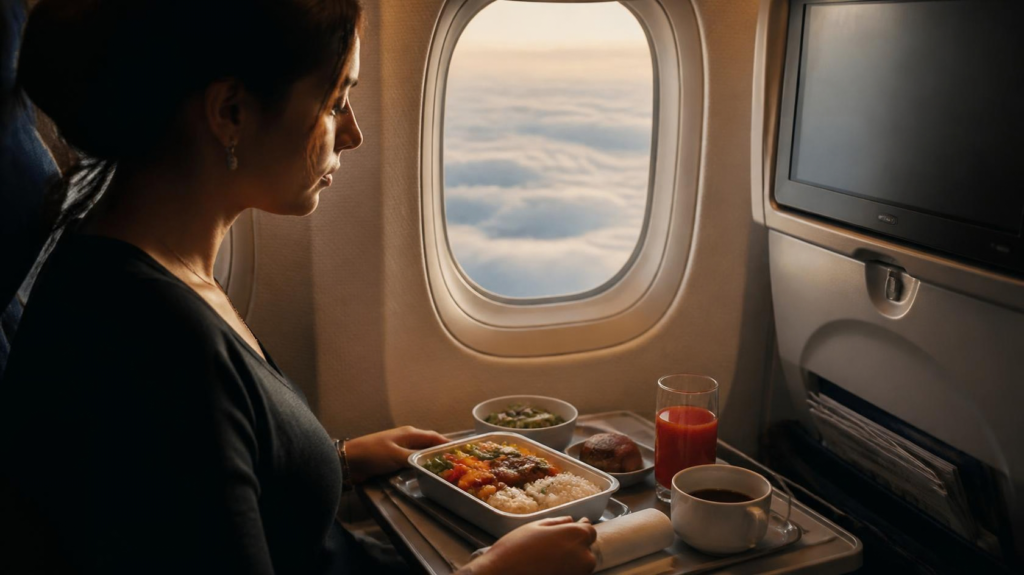
The Strange Reason Airplane Food Tastes Different
Have you ever eaten a meal on an airplane and thought, “This tastes much better on the ground”?
A dish that seems delicious in a restaurant can feel strangely bland at 35,000 feet. Coffee may taste different, tomato juice may suddenly become more appealing, and foods that normally have a strong flavor can seem unusually dull.
It is easy to blame the airline chef, the reheating process, or the quality of the ingredients. Those factors can matter, but there is another surprising explanation: your sense of taste and smell changes while you are flying.
The cabin environment affects your nose, mouth, ears, and even the way your brain interprets flavor. Airplane food is not always as tasteless as it seems. Sometimes, the conditions around you are changing how you experience it.
Taste Is More Than What Happens on Your Tongue
When we talk about taste, we usually think about the taste buds on our tongue. These detect five basic taste sensations:
- Sweet
- Salty
- Sour
- Bitter
- Umami, the savory taste found in foods such as mushrooms, tomatoes, cheese, and soy sauce
But the complete experience we call flavor is much more complicated.
Flavor is created by a combination of taste, smell, texture, temperature, appearance, and even sound. Your tongue may detect sweetness or saltiness, but your nose helps identify whether something tastes like coffee, chocolate, grilled meat, or fresh herbs.
That is why food often tastes different when you have a blocked nose. The taste buds may still be working, but your ability to detect aromas is reduced.
The same general principle applies during a flight. The aircraft cabin creates an environment in which both smell and taste can become less sensitive, making familiar foods seem weaker or less enjoyable.
The Cabin Air Is Extremely Dry
One of the biggest reasons airplane food tastes different is the low humidity inside the cabin.
Aircraft cabins are pressurized, but the air inside is usually much drier than the air found in most homes, restaurants, or outdoor environments. Cabin humidity can sometimes fall to around 10–20 percent, depending on the aircraft, passenger load, and flight conditions.
For comparison, many indoor environments on the ground have considerably more moisture in the air.
This dryness affects the nose and mouth. The nasal passages can become dry, and that makes it harder for odor molecules to interact effectively with the smell receptors inside the nose.
Because smell plays such a major role in flavor, reduced smell sensitivity can make food seem bland even when the ingredients and preparation are perfectly acceptable.
Dry air can also affect the mouth directly. When your mouth feels dry, the way food dissolves and spreads across the tongue changes. This can make eating less comfortable and reduce the intensity of certain flavors.
So, before the meal has even reached your mouth, the cabin environment may already be working against the chef.
Your Sense of Smell Does Most of the Heavy Lifting
Many people are surprised to learn how important smell is to flavor.
When you chew food, aroma compounds travel from the back of your mouth into your nasal cavity. This process is called retronasal olfaction. It allows your brain to detect the aromas released while you eat.
That is how you recognize the difference between a strawberry and a raspberry, or between roasted coffee and burnt toast.
During a flight, the dry air can reduce the efficiency of this process. Your nose becomes less effective at detecting delicate aromas, especially the subtle smells that normally make food seem fresh, complex, and satisfying.
This is one reason why delicate dishes can struggle in the air. Light wines, fresh herbs, subtle sauces, and gently seasoned foods may lose some of their impact.
Stronger flavors tend to survive the journey better because they produce more noticeable sensory signals.
Lower Cabin Pressure Also Plays a Role
Although an airplane cabin is pressurized, the pressure inside is still lower than the pressure at sea level.
Most commercial aircraft maintain a cabin environment similar to being several thousand feet above sea level, even when the plane itself is flying much higher. This is necessary for passenger comfort and safety, but it can influence the way our senses work.
Research conducted under simulated aircraft-cabin conditions has found that lower pressure can reduce sensitivity to certain tastes and smells. Sweetness and saltiness appear to be particularly affected.
This does not mean that every person loses exactly the same percentage of taste sensitivity. The effect varies depending on the individual, the food, the cabin conditions, and the sensory test being used.
However, the general result is clear: the same food can produce a different sensory experience in the air than it does on the ground.
A meal that was carefully balanced in a kitchen may therefore taste under-seasoned when served inside an aircraft.
Why Sweet and Salty Foods Can Taste Weaker
Sweet and salty flavors are among the sensations most commonly reported to become less intense during flights.
A meal that contains the usual amount of salt may taste less salty. A dessert may seem less sweet. A sauce that normally has a strong flavor may appear muted.
This creates a challenge for airline chefs.
If they prepare food using exactly the same recipe they would use in a restaurant, the meal may not taste the same once it is served in the air. To compensate, airline caterers may use stronger seasoning, richer sauces, herbs, spices, and ingredients that create more noticeable flavors.
However, simply adding more salt or sugar is not always the best solution. Too much seasoning can make food unpleasant, and the effect of the cabin environment is not identical for every flavor.
That is why airline menu design often involves more scientific testing than passengers might imagine.
Why Tomato Juice Tastes Surprisingly Good on Airplanes
One of the strangest examples of airplane flavor science is the popularity of tomato juice.
On the ground, tomato juice is not everyone’s first choice. In the air, however, it has become a famous passenger favorite.
There may be several reasons.
Tomato juice contains strong savory and umami qualities. Umami is associated with substances such as glutamate, which is naturally present in tomatoes, mushrooms, meat, and fermented foods.
Research suggests that umami flavors can remain noticeable, or may even seem more prominent, under certain aircraft-cabin conditions. Meanwhile, sweetness and saltiness may become less intense.
As a result, tomato juice can taste richer and more satisfying in the air than people expect.
The background noise of the aircraft may also influence the experience. Loud engine noise can reduce the perceived intensity of some flavors while making savory qualities stand out more strongly.
This may help explain why passengers who rarely drink tomato juice at home suddenly order it during a flight.
It is not simply a strange travel habit. The cabin environment may be changing the way the drink tastes.
The Engine Noise Can Change Your Meal
The low pressure and dry air receive most of the attention, but the sound inside an aircraft may also affect the eating experience.
Aircraft cabins are noisy environments. The steady sound of engines, ventilation systems, passenger movement, and announcements creates a constant background hum.
Research into the relationship between sound and flavor has shown that noise can influence how people perceive food. Loud background noise may reduce the intensity of sweet and salty flavors, while savory or umami sensations can remain more noticeable.
This is an example of multisensory perception. Your brain does not process taste in isolation. It combines information arriving from several senses and uses the surrounding environment to construct an overall experience.
In a quiet restaurant, you may notice the delicate sweetness of a dessert or the subtle aroma of a sauce. Inside a noisy aircraft, your brain is also processing vibration, engine sound, movement, and the unfamiliar surroundings.
The food may be exactly the same, but the sensory environment is different.
In fact, some researchers have suggested that airline chefs should taste meals while listening to sounds that imitate an aircraft cabin. This would help them understand how the food might actually be experienced by passengers.
Why Airplane Food Is Often Served With Sauce
Have you noticed that airplane meals often contain generous amounts of sauce, gravy, dressing, or seasoning?
There is a practical reason for this.
Food prepared for airline service is usually cooked on the ground, transported to the airport, loaded onto the aircraft, and reheated before being served. This process can affect texture and moisture.
A meal that tastes excellent immediately after cooking may become dry after cooling, storage, transportation, and reheating.
Sauces help protect food from becoming too dry. They also add moisture and create stronger sensory signals in a cabin where taste and smell may already be reduced.
This is particularly important for foods such as chicken, fish, pasta, rice, and vegetables. Without enough moisture, these foods may become less enjoyable after reheating.
Airline food is therefore designed around more than just flavor. Chefs must consider how a meal will survive preparation, transportation, storage, reheating, cabin conditions, and service at high altitude.
Why Some Foods Work Better in the Air
Not every food performs equally well during a flight.
Foods with delicate aromas and subtle flavors may lose some of their appeal. Lightly seasoned dishes, fragile herbs, mild sauces, and delicate wines can seem less expressive.
Stronger ingredients often perform better. These may include:
- Tomato
- Garlic
- Ginger
- Chili
- Soy sauce
- Mushrooms
- Aged cheese
- Rich sauces
- Strong herbs and spices
- Umami-rich ingredients
Sour and spicy sensations can also remain relatively noticeable compared with sweetness and saltiness. This is why some airline meals include stronger seasoning or more distinctive flavor combinations.
However, the best airplane meal is not necessarily the hottest or saltiest one. A skilled chef has to create a balance that remains enjoyable without overwhelming the passenger.
The goal is not to make food aggressively flavored. It is to make sure the important flavors remain noticeable despite the unusual environment.
Why Coffee and Wine May Taste Different
The cabin environment affects drinks as well as food.
Coffee contains many aromatic compounds, so changes in smell can alter the way passengers experience it. The same cup may seem different when consumed in a dry, noisy cabin compared with a quiet café.
Wine can also be affected. Its flavor depends heavily on aroma, acidity, sweetness, bitterness, texture, and temperature. If the nose becomes less sensitive, some of the wine’s delicate notes may disappear.
A light white wine may seem less expressive, while a stronger red wine may retain more of its character. The experience can also be influenced by the temperature at which the drink is served and the type of glass being used.
Some passengers report that sparkling wine or champagne seems sharper or more acidic in the air. This may be partly related to changes in sensory perception and partly related to the way carbon dioxide and acidity are experienced.
As with food, the exact effect differs from person to person.
Is Airplane Food Actually Worse?
Sometimes it is—but not always.
Airline food has genuine practical challenges. Meals may be prepared hours before service, transported over long distances, chilled, reheated, and served in limited space.
The equipment used for reheating may not provide the same control as a restaurant kitchen. Food may also be prepared in large quantities rather than individually for each passenger.
These factors can affect texture, freshness, and presentation.
But the cabin environment adds another layer. Even a well-prepared meal may taste less impressive because the passenger’s senses are working under different conditions.
This means that complaints about airplane food cannot always be explained by poor ingredients or careless cooking. A meal may have been carefully designed, yet still seem disappointing when experienced in the air.
In other words, the problem is not always in the food. Sometimes, it is in the environment.
Why Airlines Test Food in Special Facilities
Some airlines and food researchers have used simulated aircraft cabins to understand how meals behave during flight.
These facilities can reproduce conditions such as:
- Reduced air pressure
- Low humidity
- Aircraft noise
- Vibration
- Cabin temperature
- Lighting conditions
Researchers can then ask participants to taste and smell different foods under controlled conditions.
This helps food scientists determine which flavors become weaker, which remain noticeable, and which ingredients may work better in an aircraft cabin.
The testing process can be surprisingly detailed. A dish may need to be adjusted several times before it provides a satisfying experience in the air.
The amount of salt, sugar, herbs, spices, acidity, and sauce may all be modified. Even the way a meal is named or presented can influence how passengers perceive it.
This field of research is sometimes called gastrophysics, which explores how physical and psychological factors influence the experience of eating and drinking.
Why Food Can Taste Different Even When You Bring It From Home
You might assume that bringing your own favorite meal onto a plane would solve the problem.
It can help, especially if you prefer the taste of homemade food or want more control over ingredients. But even your own meal may taste different once you are in the air.
The dry cabin air can affect your sense of smell. Lower pressure can influence taste sensitivity. Engine noise can change how your brain processes flavors. The lighting, seating position, stress, and general travel environment can also influence the experience.
So, a sandwich that tastes excellent at home may seem less exciting during a flight.
The ingredients have not necessarily changed. Your sensory surroundings have.
A Few Ways to Make Food Taste Better During a Flight
There is no perfect solution, but a few simple choices may improve the experience.
Drink Water
Dry cabin air can leave your mouth and nose feeling uncomfortable. Staying hydrated may help reduce some of the effects of dryness, although it cannot completely restore normal ground-level conditions.
Choose Stronger Flavors
Foods with savory, spicy, sour, or umami-rich qualities may remain more noticeable than very delicate dishes.
Avoid Expecting Restaurant-Level Texture
Even a good airline meal has usually gone through cooling, transportation, and reheating. Choosing foods that tolerate reheating well can lead to a better experience.
Be Careful With Alcohol
Alcohol can contribute to dehydration and may make you feel worse during a flight. Drinking water alongside alcoholic beverages is a sensible choice.
Consider the Timing
Your senses may feel different as the flight progresses. Dryness, tiredness, stress, and hunger can all affect the way you experience food.
The Hidden Science Behind Your In-Flight Meal
Airplane food is often treated as a joke, but the science behind it is surprisingly complex.
A meal served in the sky must survive a long chain of challenges. It must be prepared safely, transported efficiently, reheated properly, and served at the right temperature. At the same time, it must taste good in an environment with dry air, reduced cabin pressure, constant noise, and unfamiliar sensory conditions.
Your taste buds are not necessarily failing. Your brain is simply receiving different information from your tongue, nose, ears, and surroundings.
That is why a meal can taste ordinary on the ground but strangely bland in the air. It is also why tomato juice can become unexpectedly appealing, why strong savory flavors often work well, and why airline chefs have to think about much more than recipes.
The next time your in-flight meal seems disappointing, remember that you may not be tasting the food under normal conditions.
You are tasting it inside a moving, pressurized, noisy laboratory in the sky.
Continue Your Journey
If you enjoyed discovering the science behind airplane food, continue exploring another aviation mystery: why airplanes have those tiny wing fins, and how such small structures can help improve flight efficiency.
Stay Curious with Trivialwiki
Follow Trivialwiki for more fascinating stories about science, aviation, history, technology, animals, geography, and the hidden facts behind everyday experiences.
- Facebook: https://facebook.com/Trivialwiki
- Instagram: https://instagram.com/trivialwiki
- YouTube: https://youtube.com/@trivialwiki
- Pinterest: https://pinterest.com/Trivialwiki
Have you ever noticed that a particular food or drink tastes better—or worse—while flying? ✈️
2 thoughts on “The Strange Reason Airplane Food Tastes Different”