
In everyday conversations, people often use the phrase “rule of thumb” to describe a simple guideline or rough estimate.
You might hear someone say:
“This is just a rule of thumb.”
The phrase suggests a quick method for making decisions without precise measurements. It’s commonly used in fields ranging from cooking and construction to business and engineering.
But where did this expression actually come from?
Over time, the phrase has gained a controversial reputation because many people believe it originated from an old law allowing a husband to discipline his wife with a stick no thicker than his thumb.
However, historians say that story is almost certainly a myth.
The true origins of “rule of thumb” are far more practical — and far less dramatic.
📏 What “Rule of Thumb” Means Today
Today, the phrase “rule of thumb” refers to a general principle based on experience rather than strict measurement.
For example:
– A cook might estimate ingredients without using measuring tools.
– A carpenter might approximate distances based on experience.
– A business analyst might rely on a commonly accepted guideline.
In all these cases, the phrase means a practical shortcut based on familiarity or observation.
It’s a quick way to apply knowledge without complicated calculations.
🧠 The Practical Origins of the Phrase
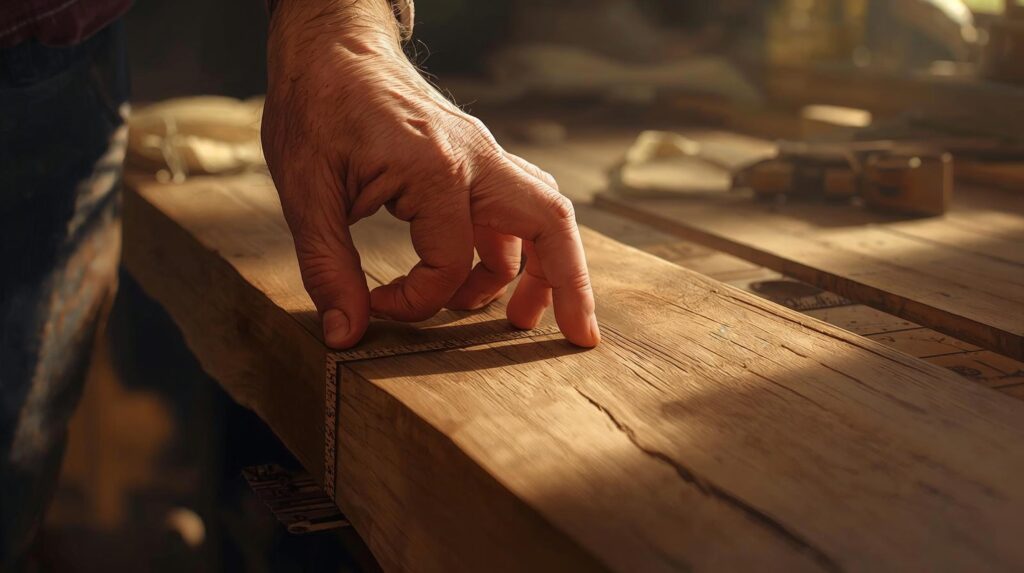
Many historians believe the phrase originated from early craftsmen and workers who used their thumb as a convenient measuring tool.
Before standardized measuring instruments became common, people often relied on parts of the body as reference points.
For example:
– The foot became a unit of length.
– The inch was sometimes based on the width of a thumb.
– The cubit measured the distance from elbow to fingertip.
Using the thumb as a rough measuring guide would have been practical in trades such as carpentry, tailoring, brewing, or agriculture.
This method provided a quick estimate when precise tools were unavailable.
📜 Early Written Uses of the Phrase
The phrase “rule of thumb” appeared in English writing as early as the 17th century.
One of the earliest known references appeared in 1685, when the expression was used to describe rough methods of measurement.
Another example comes from 18th-century brewing, where brewers sometimes estimated temperatures or ingredients using experience rather than instruments.
These early references show that the phrase was associated with practical approximations, not legal rules.
⚖️ The Myth About an Old Law
The idea that “rule of thumb” came from a law about domestic discipline likely emerged much later.
During the 19th and 20th centuries, some writers incorrectly linked the phrase to alleged legal traditions allowing husbands to beat their wives with a stick no thicker than their thumb.
Historians and legal scholars have found no credible evidence that such a law ever formally existed in English legal systems.
While domestic abuse was historically overlooked in many societies, the specific connection between the phrase and such a law appears to be a misunderstanding that developed long after the phrase was already in use.
Today most linguistic experts consider the story a popular myth rather than historical fact.
🔍 How Language Myths Spread
The misunderstanding surrounding “rule of thumb” illustrates how easily language myths can spread.
When a phrase becomes widely used, people often try to explain its origin through stories that sound memorable or dramatic.
Over time, these explanations may be repeated so often that they begin to feel like historical truth.
However, careful research by historians and linguists often reveals simpler explanations rooted in everyday practices.
In many cases, language evolves through ordinary experiences rather than dramatic events.
🌍 Why the Phrase Still Exists Today
Despite debates about its origin, the phrase “rule of thumb” remains widely used today.
In modern language, it simply means a rough guideline based on practical experience.
People use it in fields such as:
– engineering
– finance
– cooking
– education
– everyday decision-making
In most contexts, the phrase carries no negative meaning and simply refers to a useful shortcut.
💡 A Reminder That Language Evolves
The story of “rule of thumb” shows how language can change over time.
Phrases that began with simple, practical meanings can develop myths or misunderstandings as they pass through generations.
Understanding the true origins of expressions helps us appreciate how language reflects everyday life, tools, and traditions from earlier eras.
Sometimes the most common sayings come from the simplest human habits.
Even something as small as a thumb can leave its mark on language for centuries.
Continue Exploring on Trivialwiki
If you enjoyed learning about the history behind everyday expressions, don’t miss our previous post:
👉 Black Boxes and the Recorders That Survive Plane Crashes
Discover the rugged devices that record flight data and cockpit conversations to help investigators understand aviation incidents.
📬 Stay Connected with Trivialwiki
👉 Facebook: https://facebook.com/Trivialwiki
👉 Instagram: https://instagram.com/trivialwiki
👉 YouTube: https://youtube.com/@trivialwiki
👉 Pinterest: https://pinterest.com/Trivialwiki
Learn. Explore. Discover.
The phrase “rule of thumb” shows how everyday language can carry hidden history — what other common sayings have you always wondered about? Share your thoughts in the comments! 📜
1 thought on ““Rule of Thumb” and the Misunderstood Saying”