
Walk into almost any store in the world and look around.
The products on the shelves may have been manufactured thousands of kilometers away. Your smartphone might contain components from several countries. The clothes you wear could have been designed in one nation, produced in another, and shipped through multiple ports before reaching your local shop.
Global trade has become so efficient that most people rarely stop to think about how goods move around the world.
Yet behind this vast international system lies one surprisingly simple invention.
A large metal box.
Known as the shipping container, this standardized steel box transformed global commerce, reshaped economies, and helped create the interconnected world we know today.
Its impact was so profound that some historians consider it one of the most important inventions of the twentieth century.
And yet, most people barely notice it.
🚢 The World Before Containers
Before shipping containers, transporting goods was slow, expensive, and labor-intensive.
Cargo arriving at a port was typically loaded and unloaded piece by piece.
Workers manually handled:
- crates
- barrels
- sacks
- boxes
- machinery
- raw materials
This process, known as break-bulk shipping, required enormous amounts of labor.
A ship could spend days sitting in port while workers transferred cargo between ships, warehouses, trains, and trucks.
The system was inefficient and costly.
Goods were frequently damaged, misplaced, or stolen during handling.
As international trade expanded after World War II, these problems became increasingly difficult to ignore.
💡 One Man’s Frustration
The modern shipping container owes much of its existence to an American trucking entrepreneur named Malcom McLean.
In the 1950s, McLean frequently watched cargo being transferred manually between trucks and ships.
The process struck him as absurdly inefficient.
Why unload individual packages from a truck only to load them onto a ship piece by piece?
Wouldn’t it be easier to move the entire cargo unit at once?
This simple question sparked a revolutionary idea.
Instead of focusing on the cargo itself, McLean focused on the container carrying it.
📦 The Birth of the Standardized Container
McLean’s concept was elegantly simple.
Cargo would be packed into a standardized steel container that could move seamlessly between trucks, trains, and ships without being opened.
The container itself became the transport unit.
Goods could be loaded once at a factory and remain sealed until reaching their destination.
In 1956, McLean launched one of the first successful container shipping operations.
The results were dramatic.
Loading times fell dramatically. Labor costs decreased. Cargo damage declined. Security improved.
What had previously taken days could now be completed in hours.
The shipping industry would never be the same.
⚙️ Why Standardization Changed Everything
The true genius of containerization was not merely the box itself.
It was standardization.
Containers were built according to agreed dimensions, allowing them to work with specialized:
- ships
- trucks
- railcars
- cranes
- storage facilities
A container loaded in one country could travel through multiple transportation systems without requiring repacking.
This compatibility created extraordinary efficiency.
For the first time, transportation networks around the world could operate using the same basic unit of cargo.
It was similar to how standard electrical plugs or internet protocols allow systems to work together.
The container became a universal language of trade.
🌍 How Containers Shrank the World
As containerization spread globally, transportation costs fell dramatically.
Products could now be moved across oceans more cheaply and reliably than ever before.
Manufacturers gained the ability to produce goods wherever it made economic sense and then distribute them worldwide.
This development accelerated globalization.
Companies could source materials from one continent, manufacture products on another, and sell them in dozens of countries.
The modern global supply chain emerged largely because container shipping made it practical.
In many ways, the container helped shrink the world.
🏗️ Ports Had to Reinvent Themselves
Containerization transformed not only ships but entire ports.
Traditional ports designed for manual cargo handling suddenly became obsolete.
New container terminals required:
- giant cranes
- vast storage yards
- specialized logistics systems
- improved road and rail connections
Many historic waterfront areas were completely redesigned.
Cities that adapted successfully often became major international trade hubs.
Those that failed to modernize sometimes lost their importance as shipping centers.
The humble container reshaped urban landscapes as well as global commerce.
🚛 From Ship to Truck to Train
One of containerization’s greatest strengths is flexibility.
A container arriving at a port can be transferred directly onto a truck or train.
The cargo inside remains untouched.
This system, known as intermodal transport, reduces delays and minimizes handling.
A single container may travel thousands of kilometers using multiple transportation methods before reaching its destination.
The journey appears seamless because every stage of the network is designed around the same standardized box.
📈 The Rise of Mega-Ships
As container shipping expanded, ships grew larger.
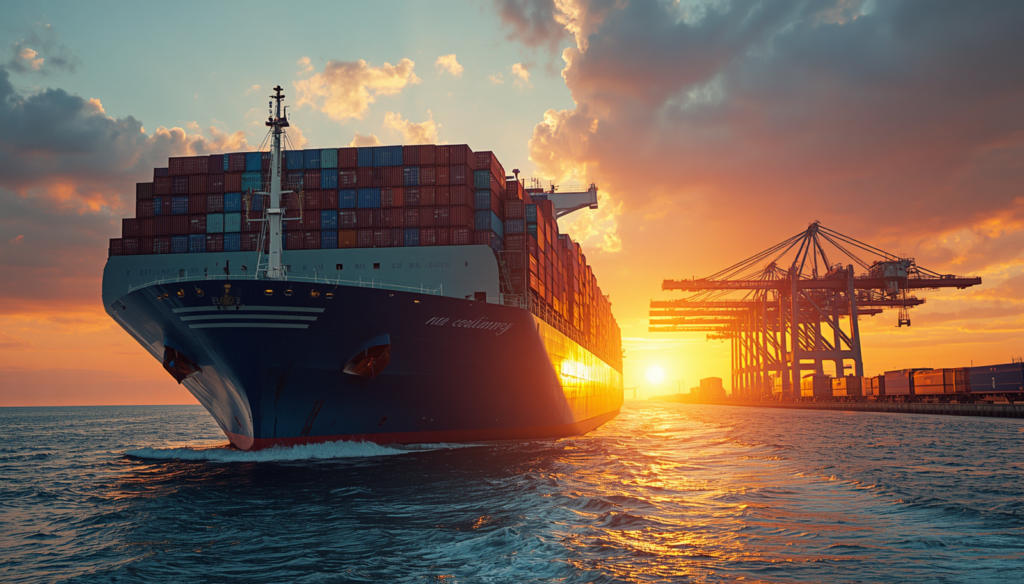
Modern container vessels can carry tens of thousands of containers on a single voyage.
Viewed from a distance, these ships resemble floating cities stacked with colorful metal blocks.
The scale is astonishing.
A single vessel can transport enough goods to fill entire shopping districts.
These giant ships have become symbols of the modern global economy.
They move quietly between continents, carrying the products that keep businesses and households supplied.
🌐 The Hidden Engine of Globalization
Most consumers never see the shipping containers that transport their purchases.
The boxes typically remain behind the scenes in ports, freight yards, and industrial zones.
Yet their influence is everywhere.
They help determine:
- product availability
- shipping costs
- manufacturing locations
- international trade patterns
Without containers, many products would be significantly more expensive.
Some global industries might not exist in their current form at all.
The modern economy depends heavily on their efficiency.
💡 The Most Important Box in the World
Great inventions are not always complex.
Sometimes they succeed because they solve a problem with elegant simplicity.
The shipping container is a perfect example.
It contains no advanced electronics. It performs no calculations. It requires no software.
It is simply a strong steel box built to standardized dimensions.
Yet that simple idea transformed transportation, accelerated globalization, and changed how goods move around the planet.
Billions of products have traveled inside shipping containers.
Entire industries have been built around them.
For an invention that most people barely notice, its impact on human civilization has been extraordinary.
The next time you purchase something made overseas, there is a good chance it spent part of its journey inside the box that changed global trade.
🚢 Next on Trivialwiki
If you enjoyed learning about the hidden infrastructure that powers the modern world, don’t miss our previous post:
👉 The Invisible Highways Beneath the Oceans
Discover how submarine fiber-optic cables carry the vast majority of global internet traffic through a hidden network lying on the ocean floor.
📬 Stay Connected with Trivialwiki
👉 Facebook: https://facebook.com/Trivialwiki
👉 Instagram: https://instagram.com/trivialwiki
👉 YouTube: https://youtube.com/@trivialwiki
👉 Pinterest: https://pinterest.com/Trivialwiki
Learn. Explore. Discover.
Shipping containers quietly move the products that power modern life. What everyday item in your home do you think has traveled the farthest distance before reaching you? Share your thoughts in the comments! 📦🌍
1 thought on “The Box That Changed Global Trade”