
Across cultures and continents, weddings are filled with meaningful rituals.
There are vows, celebrations, special clothing, and symbolic gestures that represent commitment and partnership. Among all these traditions, one small object appears almost universally in modern weddings: the wedding ring.
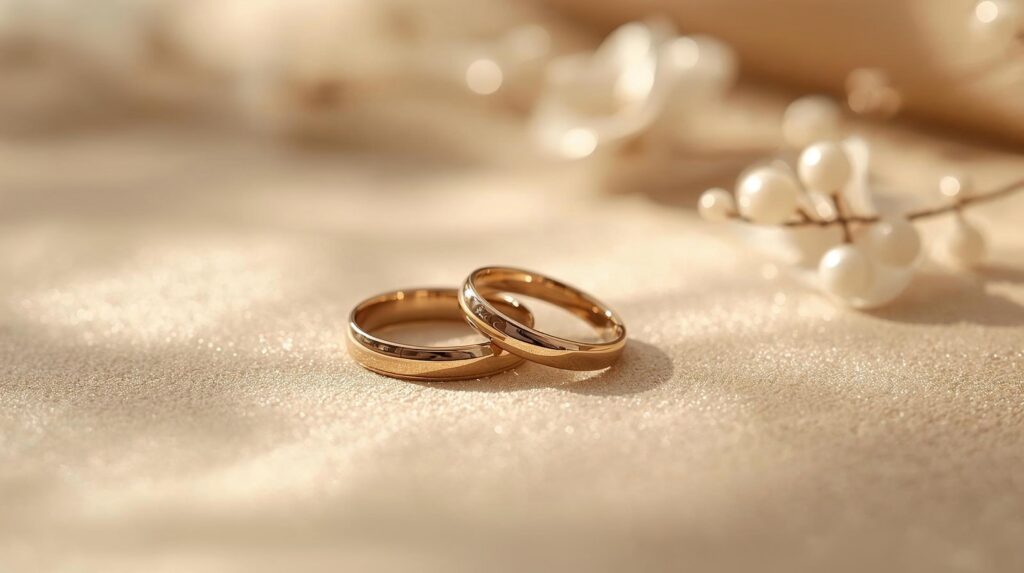
A simple circular band worn on the finger has come to represent love, unity, and lifelong commitment.
But how did this tradition begin? Why is the ring circular, and why is it worn on a particular finger?
The story of wedding rings stretches back thousands of years and reveals how symbolism, culture, and history combine to shape the traditions we follow today.
💍 The Ancient Origins of Wedding Rings
The tradition of exchanging rings during marriage dates back to ancient Egypt, more than 4,000 years ago.
Ancient Egyptians viewed the circle as a powerful symbol. Because it has no beginning and no end, it represented eternity — a perfect metaphor for lasting love and commitment.
Early wedding rings were often made from simple materials such as:
– braided reeds
– leather
– plant fibers
Couples exchanged these rings as a symbol of their bond, believing the unbroken circle represented an eternal connection between partners.
This symbolic meaning has endured for thousands of years.
🏛️ How the Romans Shaped the Tradition
The tradition spread through the Roman Empire, where wedding rings gained additional meaning.
Romans used rings not only as symbols of love but also as signs of agreement and commitment between families.
Roman wedding rings were often made of iron, symbolizing strength and permanence.
Later, wealthier couples began using rings made from gold, which eventually became the most common material for wedding rings in many cultures.
The Romans also introduced an idea that still influences modern customs — wearing the ring on a specific finger.
🖐️ The “Ring Finger” Tradition
Many people wear wedding rings on the fourth finger of the left hand, often called the ring finger.
This tradition may have originated from an ancient Roman belief in a vein called the vena amoris, meaning “vein of love.”
According to this belief, a vein ran directly from that finger to the heart.
Although modern anatomy shows that no such vein exists, the romantic symbolism persisted.
Over time, the fourth finger of the left hand became the traditional place for wedding rings in many cultures.
🌍 Different Traditions Around the World
While the symbolism of the ring remains similar across cultures, customs vary widely around the world.
For example:
– In many European countries, wedding rings are worn on the right hand instead of the left.
– In some cultures, couples exchange rings during engagement as well as during marriage.
– Certain traditions include elaborate ring designs or additional symbolic engravings.
Despite these variations, the central meaning remains the same — a visible sign of partnership and commitment.
💎 The Rise of Diamond Rings
The modern popularity of diamond wedding rings developed much later.
In the late 19th and early 20th centuries, diamonds became widely marketed as symbols of enduring love. Jewelry companies promoted the idea that diamonds represented strength, rarity, and permanence.
Advertising campaigns famously described diamonds as “forever,” reinforcing the connection between the gemstone and lifelong commitment.
Today many couples choose rings made from gold, platinum, or other precious metals, often featuring diamonds or other stones.
🧠 Why Rings Became Such Powerful Symbols
The wedding ring’s power as a symbol comes from several simple but meaningful ideas.
The circular shape represents eternity.
The metal band symbolizes strength and durability.
The placement on the finger creates a visible sign of commitment to others.
Unlike many wedding traditions that vary widely between cultures, the ring’s symbolism is easily understood across societies.
It is a small object carrying a very large meaning.
💡 A Tradition That Endures
Wedding rings have survived thousands of years of cultural change.
Empires have risen and fallen. Customs have evolved. Technology has transformed how people live and communicate.
Yet the simple act of exchanging rings during marriage has remained remarkably consistent.
From ancient Egyptian reeds to modern gold and platinum bands, the ring continues to symbolize a promise between two people.
A small circle that quietly represents something infinite.
Continue Exploring on Trivialwiki
If you enjoyed learning about the origins of cultural traditions, don’t miss our previous post:
👉 Fingerprints and the Patterns That Make Every Human Unique
Discover how tiny ridge patterns on our fingertips form before birth and make every person identifiable.
📬 Stay Connected with Trivialwiki
👉 Facebook: https://facebook.com/Trivialwiki
👉 Instagram: https://instagram.com/trivialwiki
👉 YouTube: https://youtube.com/@trivialwiki
👉 Pinterest: https://pinterest.com/Trivialwiki
Learn. Explore. Discover.
Wedding rings symbolize commitment and eternity — what cultural traditions from your region do you find most meaningful? Share your thoughts in the comments! 💍
1 thought on “Wedding Rings and the Tradition That Symbolizes Forever”