
If you’ve ever flown on an airplane, you’ve looked out of the window at clouds, cities, or endless ocean below. But there’s something about airplane windows that most of us never question.
They’re not square.
They’re not rectangular.
They’re not even perfectly round.
Instead, airplane windows are oval.
And that shape isn’t about aesthetics, comfort, or style.
It’s about survival.
The reason airplane windows are oval is rooted in one of the most important engineering lessons in aviation history—learned the hard way.
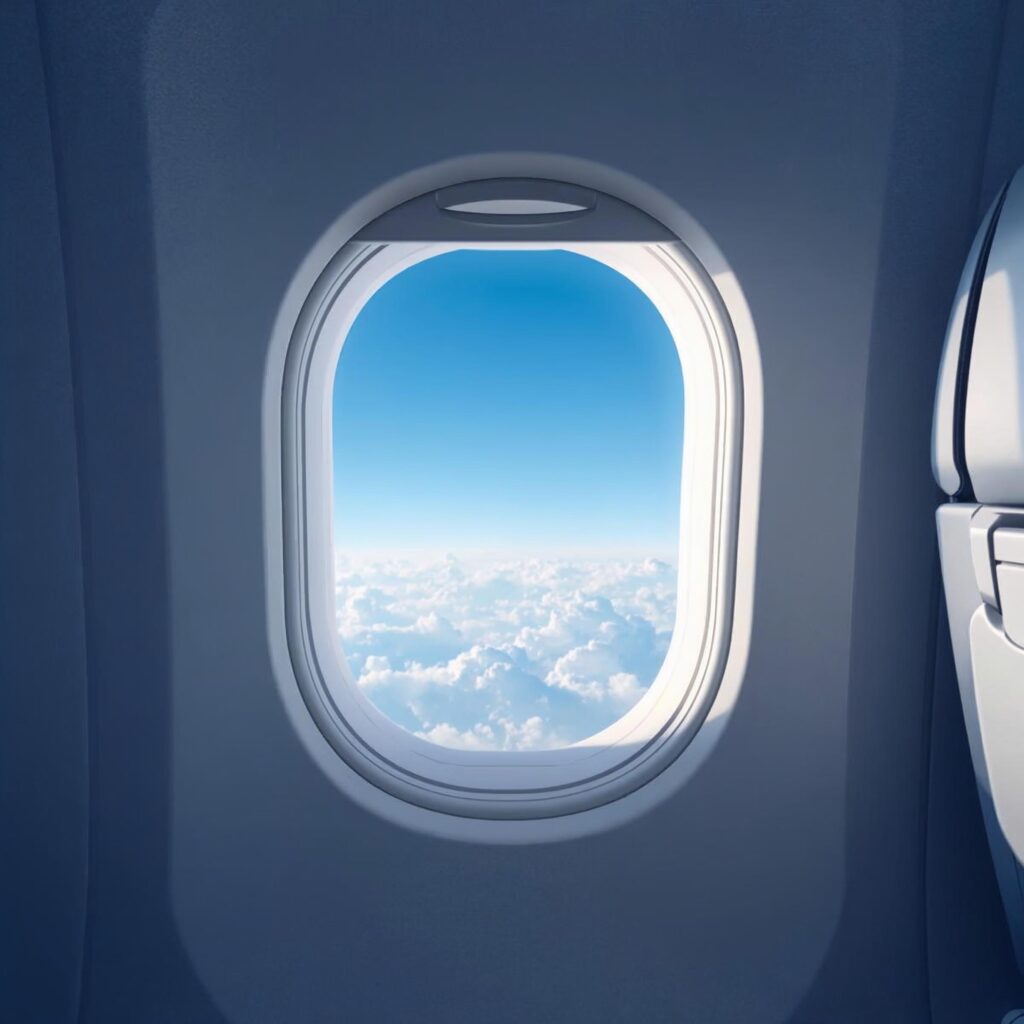
🔍 At First Glance, Window Shape Seems Trivial
On the ground, window shape doesn’t usually matter much. Buildings use square windows. Cars use rectangles. Trains mix shapes freely.
So why do airplanes—machines that operate under extreme conditions—almost always use oval or rounded windows?
To understand that, we need to look at what happens to an aircraft at cruising altitude.
🌬️ The Hidden Danger: Cabin Pressure
Commercial airplanes typically fly at altitudes of 35,000 feet or more. At that height, the outside air pressure is far too low for humans to survive comfortably.
To solve this, aircraft cabins are pressurized, meaning:
- Air is pumped into the cabin
- Pressure is maintained at a level similar to being at 6,000–8,000 feet
- The inside of the plane constantly pushes outward against the fuselage
This creates enormous stress on the aircraft’s body—especially around openings like doors and windows.
And that’s where shape becomes critical.
📐 Why Corners Are Dangerous
In engineering, sharp corners are known as stress concentrators.
When pressure is applied to a structure:
- Stress spreads evenly across smooth curves
- Stress concentrates at sharp angles and corners
Square or rectangular windows have 90-degree corners, which become weak points under repeated pressurization cycles.
Every flight creates a cycle:
- Cabin pressurizes during ascent
- Pressure remains high during cruise
- Cabin depressurizes during descent
Over time, these repeated stress cycles can cause metal fatigue—tiny cracks that slowly grow.
💥 The Tragic Lesson That Changed Aviation
This danger wasn’t always understood.
In the early 1950s, a British aircraft called the de Havilland Comet was one of the world’s first commercial jet airliners. It featured large, square windows—modern-looking and stylish for the time.
Then disaster struck.
Several Comet aircraft broke apart mid-air during flight. Investigations revealed the cause:
Cracks formed at the sharp corners of the square windows due to repeated pressurization.
Eventually, the metal failed catastrophically.
The lesson was devastating—but clear.
Window shape could determine whether an aircraft survived or fell apart.
🔄 Why Oval (and Rounded) Shapes Work Better
Oval and rounded windows solve this problem elegantly.
Here’s why they’re safer:
- No sharp corners to concentrate stress
- Pressure distributes evenly along the curve
- Cracks are far less likely to start or spread
From an engineering standpoint, curves are stronger than angles when dealing with internal pressure.
This is why:
- Airplane windows are oval
- Aircraft fuselages are cylindrical
- Submarines also use rounded shapes
Nature and engineering agree: curves handle pressure better.
🧠 Why Not Perfectly Round Windows?
You might wonder:
If round is best, why not make airplane windows perfectly circular?
The answer lies in practical design.
Oval windows:
- Fit better within the aircraft’s structure
- Allow more usable viewing area
- Balance strength with passenger comfort
- Align more easily with interior cabin panels
They provide the benefits of a curve while maximizing space and visibility.
👀 Passenger Comfort Is a Bonus, Not the Goal
The oval shape also happens to be:
- Easier on the eyes
- Better for viewing scenery
- Less claustrophobic than small circular windows
But these are secondary benefits.
The primary reason remains structural integrity and safety.
In aviation design, comfort always comes after survival.
🛠️ Modern Aircraft Testing Is Extreme
Today’s airplanes undergo rigorous testing before ever carrying passengers.
Manufacturers simulate:
- Tens of thousands of pressurization cycles
- Extreme temperature changes
- Structural fatigue over decades of use
Window designs are tested far beyond normal operating limits to ensure they won’t fail.
The oval window has proven itself repeatedly.
🌍 A Universal Aviation Standard
Look at almost any commercial aircraft today:
- Boeing
- Airbus
- Embraer
Different models. Different sizes.
Same window shape.
The oval airplane window has become a global aviation standard, not because it looks good—but because it works.
It’s a quiet reminder that many everyday design choices are shaped by past failures and hard-earned lessons.
🧩 Final Thoughts
Airplane windows may seem like a small detail, but they represent one of the most important safety evolutions in aviation history.
The next time you look out of that oval window at 35,000 feet, remember:
That shape exists because engineers learned—sometimes tragically—how pressure, metal, and physics interact.
It’s not decoration.
It’s protection.
Sometimes, the safest designs are the ones we barely notice.
🔗 Continue Exploring on Trivialwiki
👉 Why Are Manhole Covers Round? The Smart Design Choice Hidden Under Our Feet
📬 Stay Connected with Trivialwiki
–––––––––––––––––––––––––––––
📬 Stay Connected with Trivialwiki
👉 Facebook: https://facebook.com/Trivialwiki
👉 Instagram: https://instagram.com/trivialwiki
👉 YouTube: https://youtube.com/@trivialwiki
👉 Pinterest: https://pinterest.com/Trivialwiki
Learn. Explore. Discover.
–––––––––––––––––––––––––––––
1 thought on “Why Are Airplane Windows Oval? The Life-Saving Design Choice You’ve Probably Never Noticed”