
You’ve probably scanned a QR code with a cracked screen, poor lighting, or a code that looks scratched, smudged, or partially torn.
And somehow… it still worked.
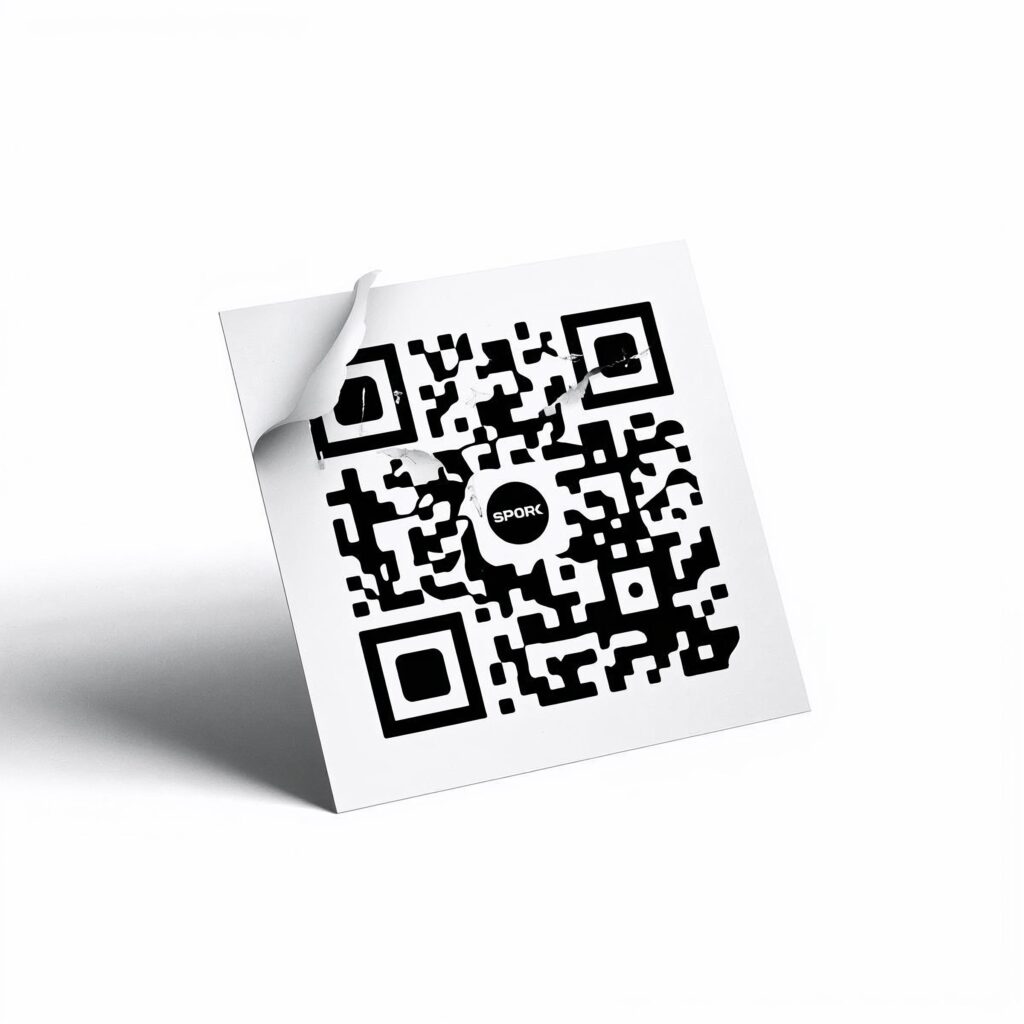
That tiny black-and-white square, which looks fragile and chaotic at first glance, hides one of the cleverest design decisions in modern technology. QR codes aren’t just convenient — they’re deliberately built to survive real-world damage.
This isn’t luck. It’s engineering.
📱 From Factory Floors to Phone Cameras
QR codes weren’t created for restaurants, payments, or posters.
They were invented in the 1990s for industrial use, where reliability mattered far more than appearance. Factory environments are harsh — dirt, oil, scratches, glare, and wear are unavoidable.
Barcodes struggled under these conditions. QR codes were designed to solve that problem.
They had to be:
- Read quickly
- Read accurately
- Read even when damaged
That requirement shaped everything about their design.
🔲 It’s Not Random — It’s Structured Chaos
At first glance, a QR code looks like a random mess of squares.
It isn’t.
Every QR code is a carefully structured grid, where each square (called a module) carries specific information. The layout follows strict rules that scanners understand instantly.
Those large squares in the corners? They’re not decoration. They help the scanner:
- Detect the code’s position
- Determine its orientation
- Understand its scale
Even if the code is rotated, tilted, or partially obscured, those markers help the scanner “lock on” before reading the data.
🧠 The Real Secret: Error Correction
The true magic of QR codes lies in something most users never notice: error correction.
QR codes intentionally store extra redundant data. This means not every square is essential for decoding the message. If parts of the code are missing or damaged, the scanner can reconstruct the original information.
Depending on the error correction level used, a QR code can still work even if up to 30% of it is destroyed.
That’s not a bug. That’s the feature.
🧩 How QR Codes “Guess” What’s Missing
QR codes use mathematical algorithms that allow scanners to detect inconsistencies and fill in gaps.
Think of it like finishing a sentence even when some letters are missing. Your brain uses patterns and context to understand the message.
QR scanners do the same — except they do it with extreme precision, in milliseconds.
This is why a QR code with:
- A logo in the center
- A scratch across it
- A folded corner
can still scan perfectly.
🎯 Why Those Corner Squares Matter So Much
Those three large squares in the corners are called position detection patterns.
They serve one main purpose: telling the scanner exactly where the code begins and how it’s oriented. Once the scanner understands the boundaries, it can compensate for distortion, perspective, or damage.
This is why QR codes still work when:
- Printed at odd angles
- Seen through reflections
- Scanned from a phone held slightly off-center
The code isn’t fragile. It’s forgiving by design.
🌍 Built for the Real World, Not Perfect Conditions
Many technologies work beautifully in labs and fail in everyday life.
QR codes were designed with the opposite philosophy.
They assume:
- Poor lighting
- Dirty surfaces
- Low-resolution cameras
- Human error
Instead of demanding perfection, they expect imperfection.
That’s why QR codes quietly succeeded where other systems struggled. They adapted to how people actually behave.
🔄 Why QR Codes Beat Barcodes
Traditional barcodes store information in a single direction. If part of that line is damaged, the entire code can fail.
QR codes store data both horizontally and vertically. Damage in one area doesn’t erase the whole message.
They also store far more information in a smaller space — text, URLs, numbers, and more — while remaining readable.
It’s a leap forward disguised as a simple square.
🧑💻 Why Phones Can Scan Them So Easily
Modern smartphones didn’t need special hardware to adopt QR codes.
The design was already camera-friendly:
- High contrast
- Clear structure
- Built-in error correction
As phone cameras improved, QR codes suddenly felt effortless to use. What changed wasn’t the code — it was our access to it.
Good design often waits quietly until the world catches up.
💡 A Lesson in Invisible Intelligence
QR codes don’t try to look smart.
They don’t advertise their complexity. They don’t explain themselves. They just work — even when conditions are bad.
That’s why they feel almost magical.
The best designs don’t demand attention. They earn trust by functioning reliably, again and again, without drama.
🧠 Why QR Codes Will Stick Around
QR codes aren’t trendy. They’re resilient.
They require:
- No batteries
- No connectivity
- No updates
They bridge physical and digital worlds with minimal friction. As long as people use screens and cameras, QR codes will remain relevant.
Not because they’re flashy — but because they’re dependable.
Continue Exploring on Trivialwiki
If you enjoyed uncovering the hidden intelligence behind everyday technology, don’t miss our previous post:
👉 QWERTY Keyboards: A 150-Year-Old Design We Still Can’t Let Go Of
A fascinating look at how an old typewriter layout still shapes the digital world today.
📬 Stay Connected with Trivialwiki
–––––––––––––––––––––––––––––
👉 Facebook: https://facebook.com/Trivialwiki
👉 Instagram: https://instagram.com/trivialwiki
👉 YouTube: https://youtube.com/@trivialwiki
👉 Pinterest: https://pinterest.com/Trivialwiki
Learn. Explore. Discover.
–––––––––––––––––––––––––––––
QR codes work even when broken because they expect the real world to be messy — what other everyday technologies do you think are smarter than they look?
Share your thoughts in the comments and keep the curiosity alive.
1 thought on “QR Codes: The Smart Design That Still Works When Damaged”