
Some countries feel ancient. Others feel futuristic.
Japan somehow feels like both at the same time.
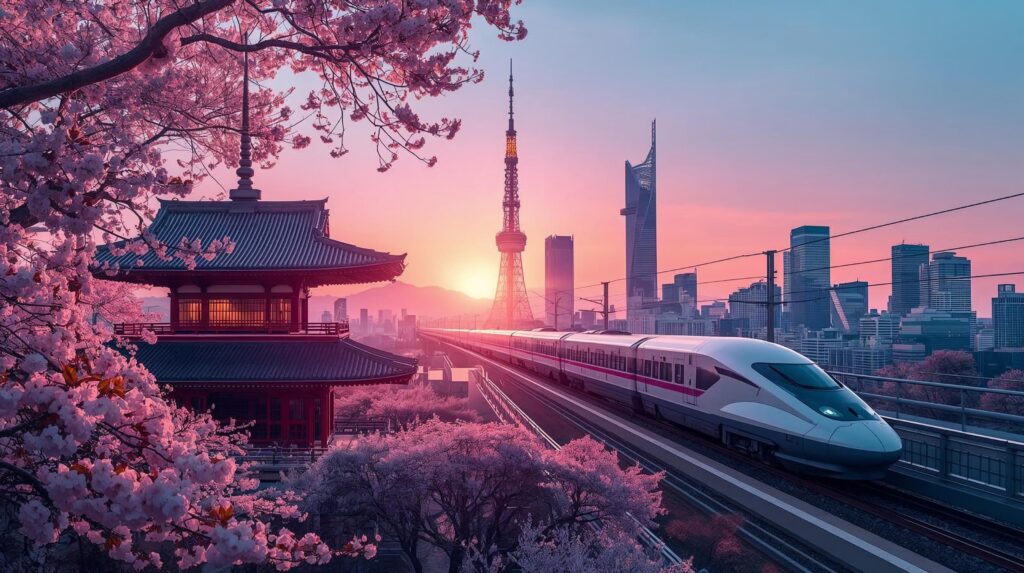
Walk through Kyoto and you’ll find centuries-old wooden temples standing quietly beside stone pathways. Step into Tokyo and you’re surrounded by neon lights, bullet trains, robotics labs, and some of the most advanced technology on Earth.
Few nations balance deep-rooted tradition and relentless innovation as seamlessly as Japan. It is a country shaped by nature, disciplined by history, and propelled by precision.
🗾 An Island Nation Defined by Geography
Japan is an archipelago — a chain of islands stretching along the eastern edge of Asia. Its four main islands — Honshu, Hokkaido, Kyushu, and Shikoku — make up most of its landmass.
Being an island nation shaped everything.
Isolation allowed Japan to develop a distinct culture, language, and social system over centuries. At the same time, proximity to China and Korea brought waves of influence — writing systems, religion, art, and governance structures.
Japan absorbed what it needed, adapted it, and refined it.
Geography also made Japan intensely aware of nature. Earthquakes, volcanic activity, and tsunamis are part of its reality. The country sits on the Pacific Ring of Fire, one of the most seismically active zones in the world.
Living with constant natural uncertainty cultivated resilience, discipline, and careful planning — qualities that still define modern Japan.
🏯 A Deeply Rooted Past
Japan’s recorded history stretches back thousands of years. The imperial family, traditionally considered the world’s oldest hereditary monarchy, traces its origins to ancient times.
The samurai era left an enduring cultural mark. Samurai were not merely warriors — they followed a strict code known as bushido, emphasizing loyalty, honor, and discipline. These values echo even in modern corporate culture and social expectations.
Religiously, Japan blends Shinto and Buddhism in a way that feels uniquely harmonious. Shrines and temples coexist peacefully, reflecting a spiritual approach centered on respect for nature and ancestors.
Tradition in Japan is not a relic. It is active and preserved.
🚄 A Leap Into the Future
If tradition anchors Japan, technology propels it.
Japan is globally recognized for:
– High-speed bullet trains (Shinkansen)
– Robotics and automation
– Precision manufacturing
– Consumer electronics innovation
– Automotive excellence
The Shinkansen, introduced in 1964, symbolized Japan’s post-war rebirth. It was not just a train — it was a statement of modern capability.
Today, Japanese cities showcase advanced infrastructure, seamless public transport, and efficient urban design. Even vending machines — found on nearly every corner — reflect attention to convenience and detail.
Japan doesn’t adopt technology casually. It perfects it.
🎎 Culture of Discipline and Detail
One of the most striking aspects of Japan is its cultural precision.
From meticulously prepared sushi to carefully choreographed tea ceremonies, attention to detail is not optional — it’s expected.
Public spaces are clean. Trains run on time with near-mythical punctuality. Social etiquette emphasizes respect and harmony.
This discipline is not rigid for its own sake. It’s rooted in the idea that individual behavior contributes to collective well-being.
The result is a society that feels both structured and remarkably calm.
🌸 Seasons That Shape Society
Japan experiences distinct seasons, and each one carries cultural significance.
Cherry blossom season, or sakura, draws millions outdoors to admire fleeting pink blossoms. Autumn leaves inspire travel and reflection. Seasonal festivals punctuate the year with color and ritual.
Nature is not separate from daily life — it’s woven into it.
This seasonal awareness reinforces mindfulness and appreciation for impermanence, a theme deeply embedded in Japanese art and philosophy.
🎌 From Isolation to Global Influence
For much of its history, Japan practiced periods of isolation, limiting foreign influence to preserve stability.
In the 19th century, rapid modernization transformed the nation almost overnight. Japan adopted industrial systems, military structures, and global trade networks with astonishing speed.
After World War II, Japan rebuilt itself again — this time emerging as an economic powerhouse in electronics, automobiles, and manufacturing.
Today, Japanese pop culture — anime, manga, gaming, fashion, cuisine — influences audiences worldwide.
Isolation once preserved Japan’s identity. Globalization amplified it.
🏙️ Cities of Contrast
Tokyo, the capital, is one of the world’s largest metropolitan areas. It feels futuristic, fast, and layered with subcultures.
Kyoto feels timeless, filled with shrines and preserved architecture.
Osaka is known for culinary culture and humor.
Hiroshima stands as a solemn reminder of history and resilience.
Each city contributes a distinct tone to the national story.
Japan is unified — but never uniform.
🌏 A Country Built on Balance
Japan’s greatest achievement may not be technological or economic. It may be balance.
It balances:
– Ancient ritual and digital innovation
– Collective harmony and personal creativity
– Natural vulnerability and engineered resilience
– Global influence and cultural preservation
That balance did not happen by accident. It emerged through centuries of adaptation.
💡 Tradition and Innovation Can Coexist
Japan challenges a common assumption — that progress requires abandoning the past.
Here, tradition strengthens identity while innovation drives growth. Wooden shrines are maintained beside glass towers. Kimono and robotics share the same streets.
The future doesn’t erase history. It stands beside it.
That coexistence is what makes Japan so compelling — and so unique.
Continue Exploring on Trivialwiki
If you enjoyed discovering how geography and history shape national identity, don’t miss our previous post:
👉 Brazil: The Only Portuguese-Speaking Giant in South America
A look at how colonial history and geography made Brazil culturally distinct within South America.
📬 Stay Connected with Trivialwiki
👉 Facebook: https://facebook.com/Trivialwiki
👉 Instagram: https://instagram.com/trivialwiki
👉 YouTube: https://youtube.com/@trivialwiki
👉 Pinterest: https://pinterest.com/Trivialwiki
Learn. Explore. Discover.
Japan shows that modernity and tradition don’t have to compete — what other countries do you think balance the past and future in a unique way? Share your thoughts in the comments 🇯🇵
1 thought on “Japan: The Island Nation Where Tradition Meets the Future”