
You’ve walked over them thousands of times.
You’ve driven over them without a second thought.
They sit quietly in the middle of busy streets, sidewalks, and intersections.
Yet one simple question has puzzled people for decades:
Why are manhole covers almost always round?
It’s not an accident.
It’s not tradition.
And it’s definitely not laziness.
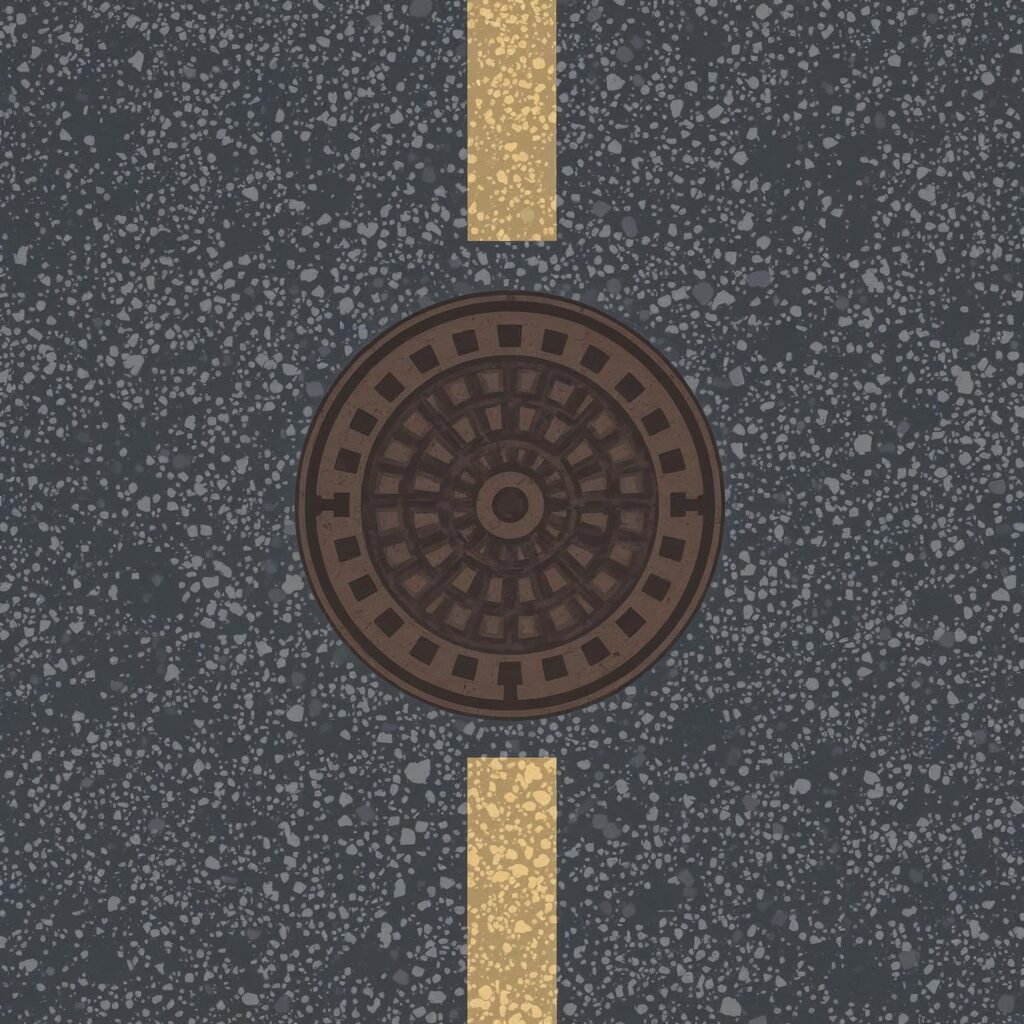
The round shape of manhole covers is one of the smartest examples of everyday engineering—combining physics, safety, efficiency, and practicality in a way most of us never notice.
Let’s uncover the surprisingly clever reasons hidden beneath this everyday object.
🔍 What Is a Manhole, Anyway?
A manhole is an access point to underground infrastructure, allowing workers to enter sewer systems, storm drains, electrical tunnels, and utility networks.
Manhole covers must be:
- Strong enough to support vehicles
- Easy enough for workers to move
- Safe for pedestrians
- Secure against accidental falls
Given these requirements, the shape matters more than you might think.
⚠️ The #1 Reason: Round Covers Can’t Fall In
This is the most important reason manhole covers are round.
A round manhole cover cannot fall through its own opening, no matter how it’s rotated.
Why?
Because the diameter of a circle is the same from every angle.
A square or rectangular cover, on the other hand, can fall diagonally through its opening if aligned just right. That would be extremely dangerous—for workers below and for anyone walking nearby.
With a round cover:
- There’s no orientation where it can slip through
- Gravity works in your favor
- Safety is guaranteed by geometry
This single advantage makes the circular shape incredibly valuable.
🧠 Simple Physics, Brilliant Solution
From a physics perspective, circles distribute force evenly.
When vehicles pass over a round manhole cover:
- The weight is spread uniformly
- Stress points are minimized
- The cover resists cracking
This uniform load distribution makes round covers more durable and longer-lasting, especially in high-traffic areas.
In contrast, corners on square or rectangular covers tend to experience higher stress concentrations, making them more prone to damage.
🏋️ Easier for Workers to Handle
Manhole covers are heavy—often weighing between 50 to 150 kilograms (110–330 pounds).
A round cover can be:
- Rolled instead of lifted
- Tilted and maneuvered more easily
- Moved by a single worker in some cases
Square covers require precise alignment and are much harder to reposition safely.
Rolling a circular cover along the ground is far safer than trying to carry a heavy object with sharp edges.
🏗️ Manufacturing Efficiency
Round manhole covers are easier and cheaper to manufacture.
Why?
- Circular molds distribute molten metal evenly
- Less material stress during casting
- Fewer defects
- More consistent results
This efficiency becomes crucial when cities need thousands of covers.
Over time, the cost savings add up significantly.
🌧️ Better Resistance to Weather and Movement
Roads expand and contract with temperature changes. Over time, surfaces shift slightly.
A round cover:
- Fits snugly in its frame
- Has no corners to catch or misalign
- Is less likely to shift out of place
Square covers can rotate, tilt, or loosen more easily, increasing the risk of noise, wobbling, or even accidents.
🏙️ Why Aren’t All Manhole Covers Round Then?
You may have noticed that not all covers are circular. Some are rectangular or square—especially in sidewalks or building entrances.
That’s because:
- Rectangular openings may be required for specific equipment
- Space constraints dictate shape
- Some utility systems use different standards
However, on roads and high-traffic areas, round covers dominate for good reason.
When safety, durability, and efficiency matter most, circles win.
🌍 A Global Design Standard
Travel almost anywhere in the world and you’ll find round manhole covers:
- New York
- Tokyo
- London
- Paris
- Mumbai
Different patterns, symbols, and materials—but the same shape.
Some countries even turn manhole covers into art, decorating them with local symbols while keeping the circular design intact.
The shape is universal because the logic behind it is universal.
🤯 Other Lesser-Known Benefits
Here are a few more subtle advantages of round manhole covers:
- No need to align the cover during replacement
- Reduced chance of accidental tipping
- Easier sealing against odors
- Lower chance of rattling under traffic
Every one of these adds up to safer streets and smoother infrastructure.
🧩 So… Was This Always Known?
Interestingly, early sewer systems experimented with different shapes.
But over time, engineers learned—sometimes the hard way—that round covers simply worked better.
Today, the circular manhole cover is a perfect example of form following function.
Not flashy.
Not obvious.
Just quietly brilliant.
🧠 Final Thoughts
Manhole covers are everywhere, yet invisible in our daily awareness.
The next time you step over one, remember:
That simple circle beneath your feet represents decades of engineering wisdom, physics, and practical problem-solving.
Sometimes, the smartest designs are the ones we stop noticing.
🔗 Continue Exploring on Trivialwiki
👉 Why Is a Marathon 26.2 Miles Long? The Surprising Story Behind the World’s Toughest Race
📬 Stay Connected with Trivialwiki
–––––––––––––––––––––––––––––
📬 Stay Connected with Trivialwiki
👉 Facebook: https://facebook.com/Trivialwiki
👉 Instagram: https://instagram.com/trivialwiki
👉 YouTube: https://youtube.com/@trivialwiki
👉 Pinterest: https://pinterest.com/Trivialwiki
Learn. Explore. Discover.
–––––––––––––––––––––––––––––
Interesting