
When athletes stand on the Olympic podium, few moments in sports feel more significant.
Years of training, sacrifice, and determination culminate in a single achievement: winning an Olympic gold medal. For many competitors, it represents the highest honor their sport can offer.
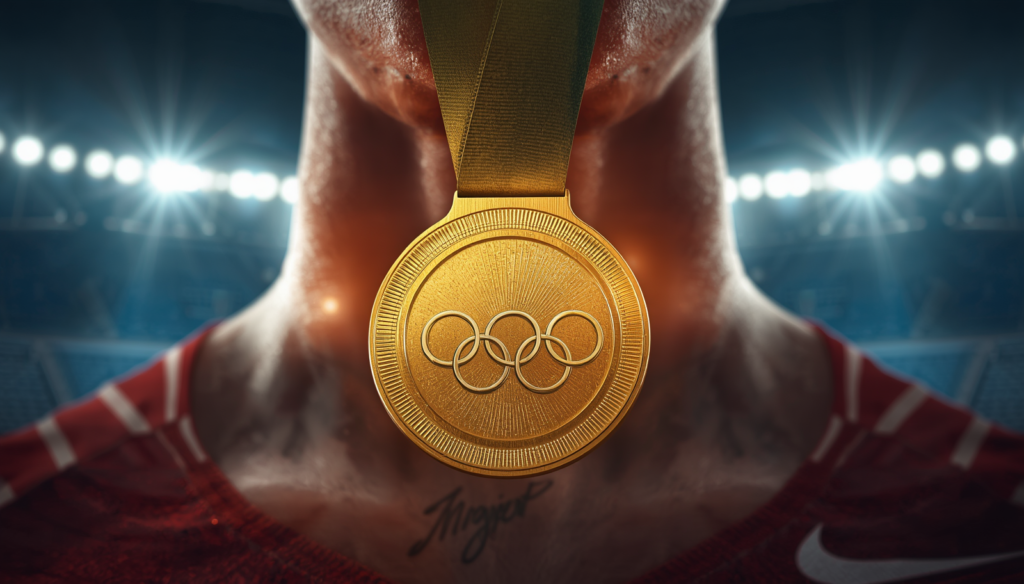
The medal itself has become a universal symbol of excellence. We call it a “gold medal,” celebrate gold medalists, and associate the color gold with victory.
But there is a surprising fact that many people don’t realize.
Modern Olympic gold medals are not actually made entirely of gold.
In fact, if they were, they would be extraordinarily expensive and much heavier than they are today.
The story behind Olympic medals reveals a fascinating blend of history, economics, tradition, and symbolism.
🏛️ The Ancient Olympics Had No Gold Medals
To understand why Olympic gold medals aren’t really gold, it helps to go back to the origins of the Olympic Games.
The ancient Olympics began in Greece more than 2,700 years ago.
Back then, winners did not receive medals at all.
Instead, victorious athletes were awarded olive wreaths made from branches of sacred olive trees. These crowns had little monetary value, but they carried enormous prestige and honor.
For ancient Greeks, recognition and glory mattered far more than precious metals.
The idea of awarding gold, silver, and bronze medals would not appear until much later.
🥇 When Gold Medals First Appeared
The modern Olympic Games were revived in 1896 under the leadership of Pierre de Coubertin.
Interestingly, athletes at the first modern Olympics in Athens did not receive gold medals either.
Instead:
- First-place winners received silver medals.
- Second-place finishers received bronze medals.
The familiar gold-silver-bronze system was introduced later and became standard at the 1904 Olympic Games in St. Louis.
Since then, the gold medal has become one of the most recognizable awards in the world.
Yet even after gold medals were introduced, their composition would eventually change.
💰 The Problem with Solid Gold
At first glance, making a gold medal entirely from gold sounds logical.
After all, it’s called a gold medal.
The problem is cost.
Gold is one of the world’s most valuable metals. Producing hundreds of large solid-gold medals for every Olympic Games would require an enormous amount of precious metal.
As gold prices increased over time, creating solid-gold medals became increasingly impractical.
Olympic organizers needed a solution that preserved the symbolism of gold while remaining economically realistic.
⚙️ What Modern Gold Medals Are Actually Made Of
Today’s Olympic gold medals are primarily made of silver.
According to Olympic standards, a gold medal must contain a significant amount of silver and be coated with a layer of pure gold.
In other words, modern gold medals are essentially high-quality silver medals with a gold exterior.
The exact specifications vary slightly between Olympic Games because each host city designs and produces its own medals.
However, the basic principle remains the same.
Gold medals look like gold because they are covered in gold, but most of their mass comes from silver.
This allows organizers to maintain tradition without the enormous cost of using solid gold.
🏅 The Last Time Gold Medals Were Mostly Gold
Many people assume that Olympic gold medals have always been made this way.
In reality, there was a brief period when gold medals contained much more gold.
At the 1908 Olympic Games in London, winners received medals that were made largely from gold.
However, these medals were much smaller than modern Olympic medals.
Even then, the approach proved difficult to sustain as the Games expanded and medal production increased.
By the following decades, organizers had largely shifted toward the silver-and-gold-plating model that continues today.
🌍 Why Athletes Value Them So Highly
Knowing that Olympic gold medals are not solid gold might sound disappointing.
Yet for athletes, the value of the medal has never been determined by its metal content.
The true value comes from what it represents.
An Olympic champion may have spent:
- years training before sunrise
- thousands of hours practicing
- countless competitions preparing
- enormous physical and mental effort pursuing a dream
The medal symbolizes all of that dedication.
Its worth is measured in achievement rather than precious metals.
In many ways, the story behind the medal is far more valuable than the material itself.
🎨 Every Olympics Creates Unique Medals
Another fascinating aspect of Olympic medals is that they change from one Games to the next.
Each host city designs its own medals, often incorporating elements that reflect:
- local culture
- national identity
- Olympic history
- artistic traditions
As a result, Olympic medals are not only sporting awards but also historical artifacts.
A medal from Tokyo looks different from one awarded in Paris, London, or Beijing.
Each tells a small story about the city and era in which it was created.
♻️ Modern Medals and Sustainability
In recent years, Olympic organizers have also embraced sustainability.
Some Games have used recycled materials in medal production.
For example, old electronics such as smartphones and computers contain small amounts of precious metals that can be recovered and reused.
By incorporating recycled materials, organizers have found ways to connect the Olympic spirit with environmental responsibility.
This approach reflects how the Games continue evolving while preserving long-standing traditions.
🏆 The Most Valuable Prize in Sports?
If Olympic medals were judged purely by material value, they would not rank among the world’s most expensive objects.
Yet few awards carry greater prestige.
The phrase “Olympic gold medalist” instantly communicates excellence, discipline, and achievement.
The medal’s importance comes from the journey required to earn it.
A thin layer of gold may cover the surface, but behind it lies a story of years of effort and determination.
💡 More Than Just Gold
The next time you watch an athlete standing atop the Olympic podium, remember that the gold medal around their neck is not truly made of solid gold.
But that hardly matters.
Its value was never about the metal.
The medal represents one of humanity’s oldest ideals: striving to be the very best.
For more than a century, Olympic champions have carried that symbol with pride.
And in the end, the achievement it represents is worth far more than gold.
🌟 Keep Exploring
If you enjoyed discovering surprising facts hidden behind familiar symbols, don’t miss our previous post:
👉 Venice: The City That Learned to Float
Explore the remarkable story of how a city built on muddy islands became one of history’s greatest engineering and commercial achievements.
📬 Stay Connected with Trivialwiki
👉 Facebook: https://facebook.com/Trivialwiki
👉 Instagram: https://instagram.com/trivialwiki
👉 YouTube: https://youtube.com/@trivialwiki
👉 Pinterest: https://pinterest.com/Trivialwiki
Learn. Explore. Discover.
Olympic gold medals may not be made entirely of gold, but they remain one of the most coveted prizes in sports. Which sporting trophy or award do you think is the most iconic in the world? Share your thoughts in the comments! 🥇🏆
1 thought on “Why Olympic Gold Medals Aren’t Really Gold”