
In a quiet room, far away from political rallies and breaking news headlines, a symbolic clock is occasionally adjusted by a group of scientists. There are no ticking sounds. No dramatic alarms. Yet when its hands move, the world pays attention.
This is the Doomsday Clock—a stark visual metaphor designed to answer one unsettling question: how close is humanity to destroying itself?
It doesn’t predict the future. It doesn’t count down to an exact moment. Instead, it reflects our collective choices, anxieties, and risks. And over the decades, its hands have crept dangerously close to midnight.
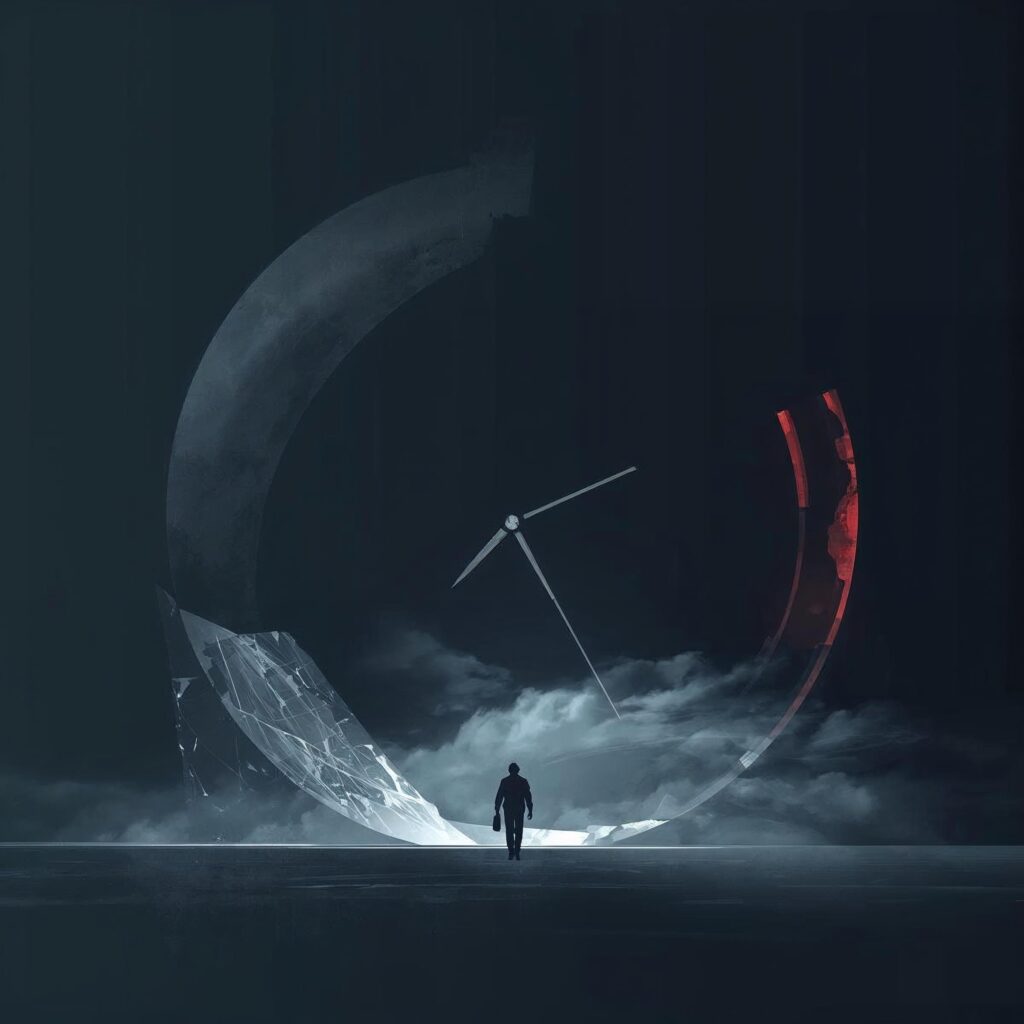
🕰️ A Clock That Doesn’t Tell Time
The Doomsday Clock is not a physical device that measures seconds or minutes. It’s a symbol, created to represent how close humanity is to a global catastrophe of its own making.
Midnight represents total destruction—an irreversible collapse caused by nuclear war, climate disaster, or other existential threats. The closer the clock moves to midnight, the greater the perceived danger.
What makes the clock unsettling is not its simplicity, but its message: human survival is no longer guaranteed by default.
🧠 Born from Atomic Anxiety
The clock was created in the late 1940s, in the aftermath of the atomic bombings that ended World War II. Scientists who had worked on nuclear weapons were deeply unsettled by what they had unleashed.
They understood something most people didn’t yet grasp: technology had reached a point where humanity could erase itself.
The clock was introduced as a warning—not to governments alone, but to the public. A way to translate complex global risks into a single, chilling image.
☢️ Nuclear Weapons Set the Clock in Motion
For decades, nuclear weapons were the primary factor influencing the clock’s position.
At times of escalating arms races, failed treaties, or geopolitical crises, the clock edged closer to midnight. During moments of cooperation and arms reduction, it moved back.
The clock reflected not just the existence of nuclear weapons, but how responsibly—or irresponsibly—they were being managed.
It wasn’t about who had more bombs. It was about whether humans were showing restraint.
🌍 New Threats Changed the Meaning of Midnight
As the world evolved, so did the clock.
Over time, scientists recognized that nuclear war was no longer the only existential threat. Climate change, cyber warfare, biological risks, and misinformation began shaping humanity’s future in equally dangerous ways.
The clock expanded from a nuclear warning into a broader measure of global instability and human decision-making.
Midnight no longer meant just explosions—it meant systems collapsing beyond repair.
❄️ Climate Change Joined the Countdown
One of the most significant shifts in the clock’s history was the inclusion of climate change.
Unlike nuclear war, climate collapse doesn’t arrive in a single dramatic moment. It creeps in slowly, unevenly, and often invisibly—until it’s too late to reverse.
Rising temperatures, extreme weather, melting ice caps, and mass displacement all factor into the clock’s assessment. Climate change represents a threat that is global, cumulative, and human-caused.
And unlike nuclear weapons, it’s already unfolding.
💻 Technology: Double-Edged Progress
Modern technology has added new layers of risk.
Artificial intelligence, cyber warfare, and information manipulation can destabilize societies without a single missile launch. A cyberattack on critical infrastructure or the rapid spread of disinformation can push nations toward conflict faster than ever before.
The clock reflects this uncomfortable reality: progress without safeguards can become a liability.
Innovation alone isn’t enough. Wisdom must keep pace.
🧑🔬 Who Decides Where the Clock Stands?
The Doomsday Clock is set by a panel of scientists, security experts, and researchers who analyze global trends, scientific data, and political developments.
They don’t act lightly. Moving the clock—even by seconds—is meant to spark conversation, not panic.
It’s a call to awareness, urging leaders and citizens alike to recognize risks before they become irreversible.
⚠️ Why the Clock Keeps Moving Forward
Over the years, the clock has moved back and forth—but the long-term trend has been unsettling.
Periods of cooperation have been followed by renewed tensions. Treaties have been abandoned. Global trust has weakened. New threats have emerged faster than solutions.
The clock’s forward movement doesn’t suggest inevitability. It reflects missed opportunities, short-term thinking, and a failure to act collectively.
The danger isn’t a single event. It’s complacency.
💡 A Mirror, Not a Prediction
One of the most important things to understand about the Doomsday Clock is this: it does not predict the future.
It mirrors the present.
Its hands move based on human behavior—our decisions, priorities, and willingness to cooperate. Midnight is not destiny. It’s a warning sign.
The clock exists because humans have the rare ability to recognize danger before it happens.
🌱 Why the Clock Still Matters
Some critics argue that the Doomsday Clock is outdated or overly dramatic. But its endurance proves its value.
In a world overloaded with data, the clock distills complexity into clarity. It forces uncomfortable questions:
Are we acting responsibly? Are we learning from history? Are we protecting future generations?
The fact that the clock still exists means the conversation isn’t over.
🌍 Humanity’s Choices Are the Real Timekeepers
The Doomsday Clock doesn’t tick on its own. Humans move it.
Every arms agreement, environmental policy, scientific breakthrough, or reckless decision nudges its hands. The clock doesn’t demand perfection—it demands awareness.
The closer it gets to midnight, the louder the warning becomes.
Continue Exploring on Trivialwiki
If this exploration of global risk and human limits intrigued you, don’t miss our previous post:
👉 What Was Tsar Bomba? The Most Powerful Explosion Humanity Ever Created
A sobering look at the single most destructive device ever built—and why its power frightened even its creators.
📬 Stay Connected with Trivialwiki
–––––––––––––––––––––––––––––
👉 Facebook: https://facebook.com/Trivialwiki
👉 Instagram: https://instagram.com/trivialwiki
👉 YouTube: https://youtube.com/@trivialwiki
👉 Pinterest: https://pinterest.com/Trivialwiki
Learn. Explore. Discover.
–––––––––––––––––––––––––––––
The Doomsday Clock reflects humanity’s choices, not fate — what do you think matters most in moving its hands away from midnight?
Share your thoughts in the comments and keep the conversation going.
1 thought on “The Doomsday Clock: How Close Humanity Is to Self-Destruction”